COVID interfered unfortunately, but a nice small win graduating from UNCC with an Masters in Business Administration.


Personal collective of ideas, thoughts and notes
COVID interfered unfortunately, but a nice small win graduating from UNCC with an Masters in Business Administration.
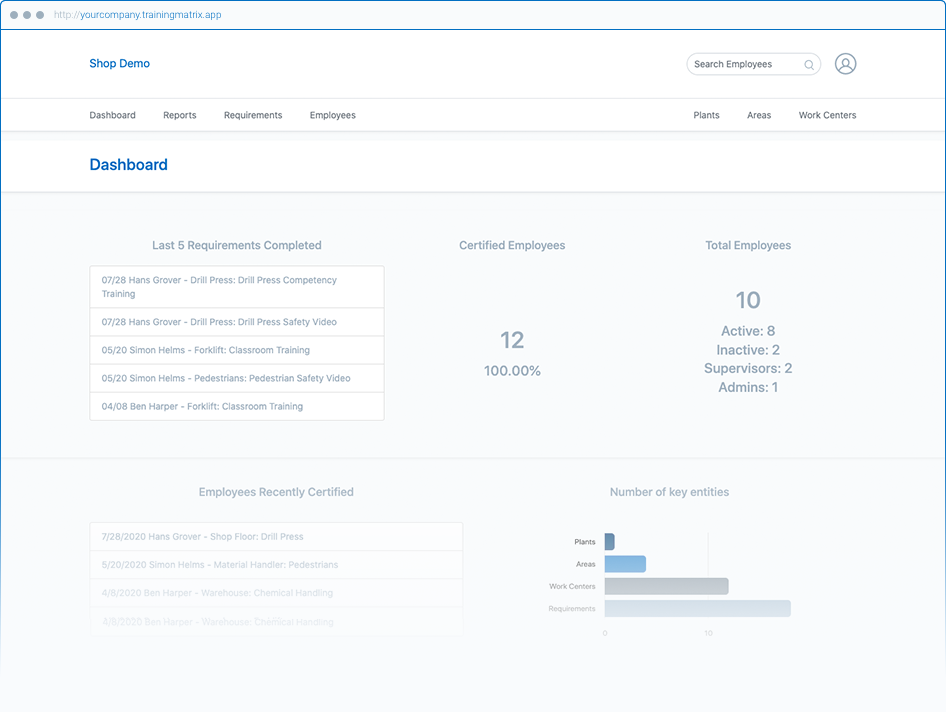
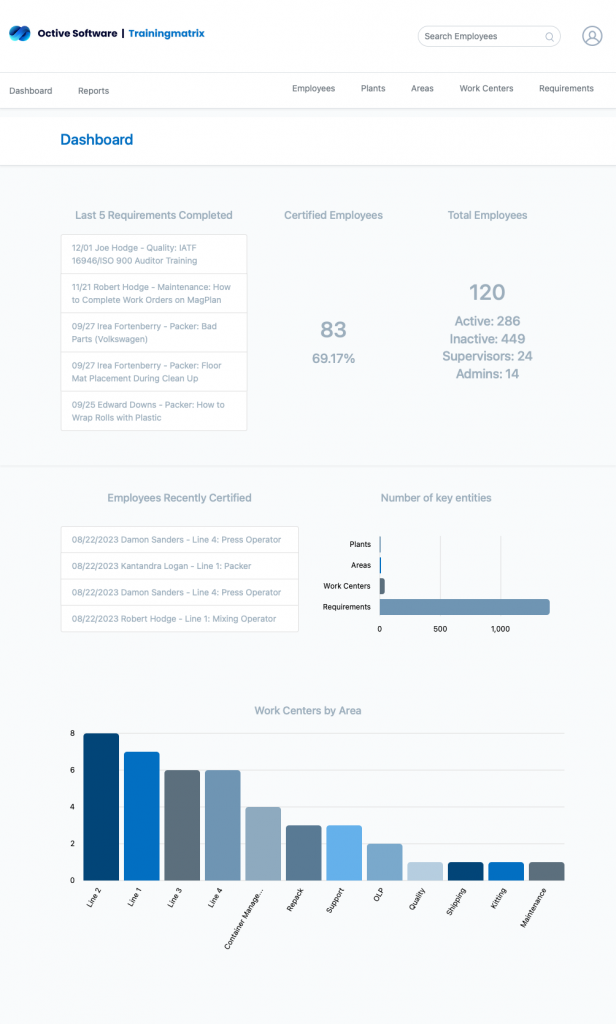
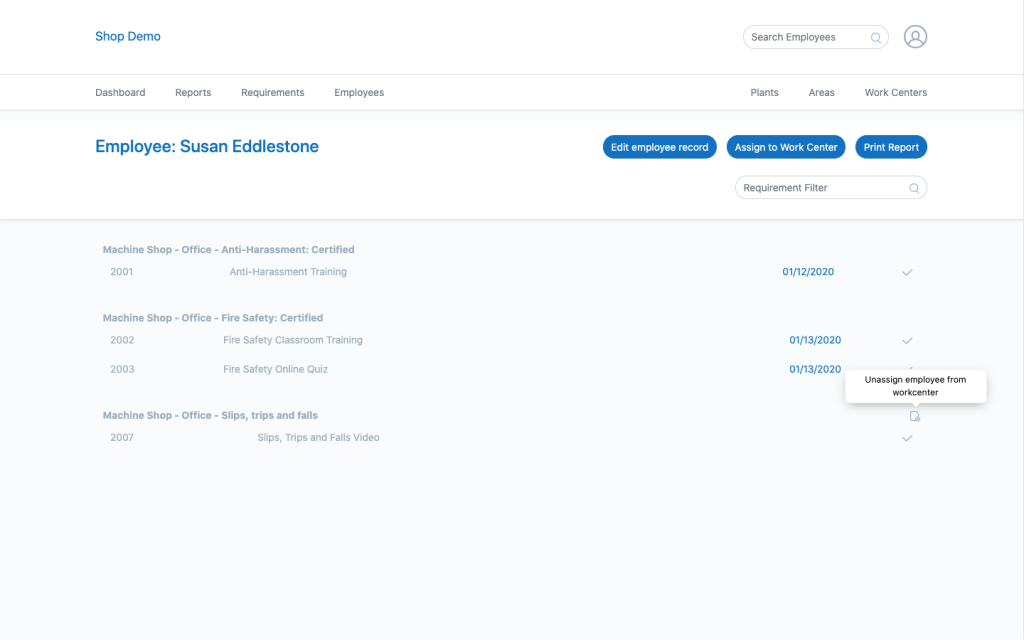
Training matrix was built from a customer demand/requirement, essentially it is a web app providing a way for a companies to track which equipment employees are authorized to work with, or operate. It falls in the employee training management software space, but not necessarily a tool for conducting the training or hosting it, like a traditional Learning Management System.
The reason the name of “Training matrix” came about is that managers or supervisors can get a concise overview of which employees are trained to work in various work area, in a matrix like view.
From an architecture standpoint, it’s a full stack app running on Node.js using Postgres for persistence. All components are running on AWS.
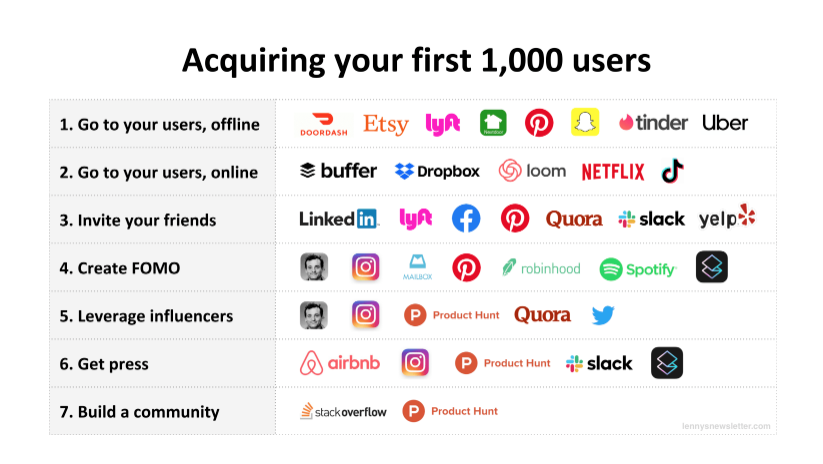
My biggest takeaways from this research:
Jon was training for ORAMM and I tagged along. In the thick of Covid. Probably the hardest ride I have ever done. In way over my head …


This was a fun 4 day program with the IBM Quantum Challenge. I probably spent +- 30 hours working through the 4 challenges, and during this time I recognized I really needed to learn more of the fundamental math aspects which Physics is built upon. In the end I completed all the work, the final challenge was a monster for someone with little theoretical knowledge in the field but after a few hints and tips from the team, I had a score which was acceptable.
This was the final requirements:
Is there some symmetry, or is it random? We just updated Qiskit with the introduction of a quantum circuit library (https://github.com/Qiskit/qiskit-terra/tree/master/qiskit/circuit/library). This library gives users access to a rich set of well-studied circuit families, instances of which can be used as benchmarks (quantum volume), as building blocks in building more complex circuits (adders), or as tools to explore quantum computational advantage over classical computation (instantaneous quantum polynomial complexity circuits).from qiskit import QuantumCircuit from may4_challenge.ex4 import check_circuit, submit_circuit
Using only single qubit rotations and CNOT gates, find a quantum circuit that approximates that unitary by a unitary up to an error , such that !
Note that the norm we are using here is the spectral norm, .
This can be seen as the largest scaling factor that the matrix has on any initial (normalized) state . One can show that this norm corresponds to the largest singular value of , i.e., the square root of the largest eigenvalue of the matrix , where denotes the conjugate transpose of .
When you submit a circuit, we remove the global phase of the corresponding unitary before comparing it with using the spectral norm. For example, if you submit a circuit that generates , we remove the global phase from before computing the norm, and you will have a successful submission. As a result, you do not have to worry about matching the desired unitary, , up to a global phase.
As the single-qubit gates have a much higher fidelity than the two-qubit gates, we will look at the number of CNOT-gates, , and the number of u3-gates, , to determine the cost of your decomposition as
Try to optimize the cost of your decomposition.
Note that you will need to ensure that your circuit is composed only of and gates. The exercise is considered correctly solved if your cost is smaller than 1600.
import qiskit.extensions.quantum_initializer.isometry as isometry
from qiskit.quantum_info.operators import Operator
import qiskit.compiler.transpile as transpile
from scipy.linalg import hadamard
from math import pi

qc = QuantumCircuit(4)

#apply hadamard using u3 gates
qc.u3(pi/2,0,pi,[0])
qc.u3(pi/2,0,pi,[1])
qc.u3(pi/2,0,pi,[2])
qc.u3(pi/2,0,pi,[3])

#k=HUH
Y=np.diag(k*np.exp(-2j*pi/3))
qc.diagonal(list(Y),[0,1,2,3])

qc.u3(pi/2,0,pi,[0])
qc.u3(pi/2,0,pi,[1])
qc.u3(pi/2,0,pi,[2])
qc.u3(pi/2,0,pi,[3])

qc3=transpile(qc, basis_gates=['u3', 'cx'],optimization_level=3)
check_circuit(qc3)

Circuit stats:
||U-V||_2 = 2.5785120546697708e-15
(U is the reference unitary, V is yours, and the global phase has been removed from both of them).
Cost is 51

Great! Your circuit meets all the constrains.
Your score is 51. The lower, the better!
Feel free to submit your answer and remember you can re-submit a new circuit at any time!
qc3.draw(output='mpl')
I just got finished submitting my last optimization circuit for the 2020 IBM Quantum Challenge. It was a hectic 4 days of spare time working through their challenges but very rewarding. It’s amazing what a small concept like a “Challenge” can do for your motivation to understand more about a technology or field, but to me the size of Quantum Computing community seems to have, all of a sudden, grown larger.
There have been over 5 billion circuits run against IBM Q, 1,745 participants, over 1000 people in a Slack channel who were sharing, bantering and encouraging their peers and a considerable amount of learning about circuit optimization. If I had only brushed up on my linear algebra I think I would have done a little better 😉
I have also learned not to take glory in the difficulty of a proof: difficulty means we have not understood. The idea is to be able to paint a landscape in which the proof is obvious.”
A nice chart showing various exercises you can do using just your body weight and which muscles they target. Helpful while traveling or weights and gym access is limited.

Gephi is the leading visualization and exploration software for all kinds of graphs and networks. Gephi is open-source and free.
Runs on Windows, Mac OS X and Linux.

Over the past couple of years I have had a keen interest in quantum computing and the optimism of its benefits over traditional computing methods. I have read countless papers, articles and spent a considerable amount of time deciding how I would explain it to a 5 year old.
ELI5: A normal computer is like a light switch is either on or off. A quantum computer is more like a dimmer switch, it can be partially on, or partially off.
It’s overly simplistic but gives a simple understanding of the potential states that the device can be in. I also wonder how I would explain QC to friends or technology friends. Trying to find the right words that quantify both its elementary simplicity and its quantitative complexity is difficult, especially when you yourself don’t fully grasp it. But like other technologies, the best way to learn is by doing … experimenting, researching and proofing. Leading to your own understanding and comprehension of existing anecdotes and theories or new ones.
You must be logged in to post a comment.